
Peripheral Artery Disease Gains National Attention: What New Federal Actions Mean for Patients
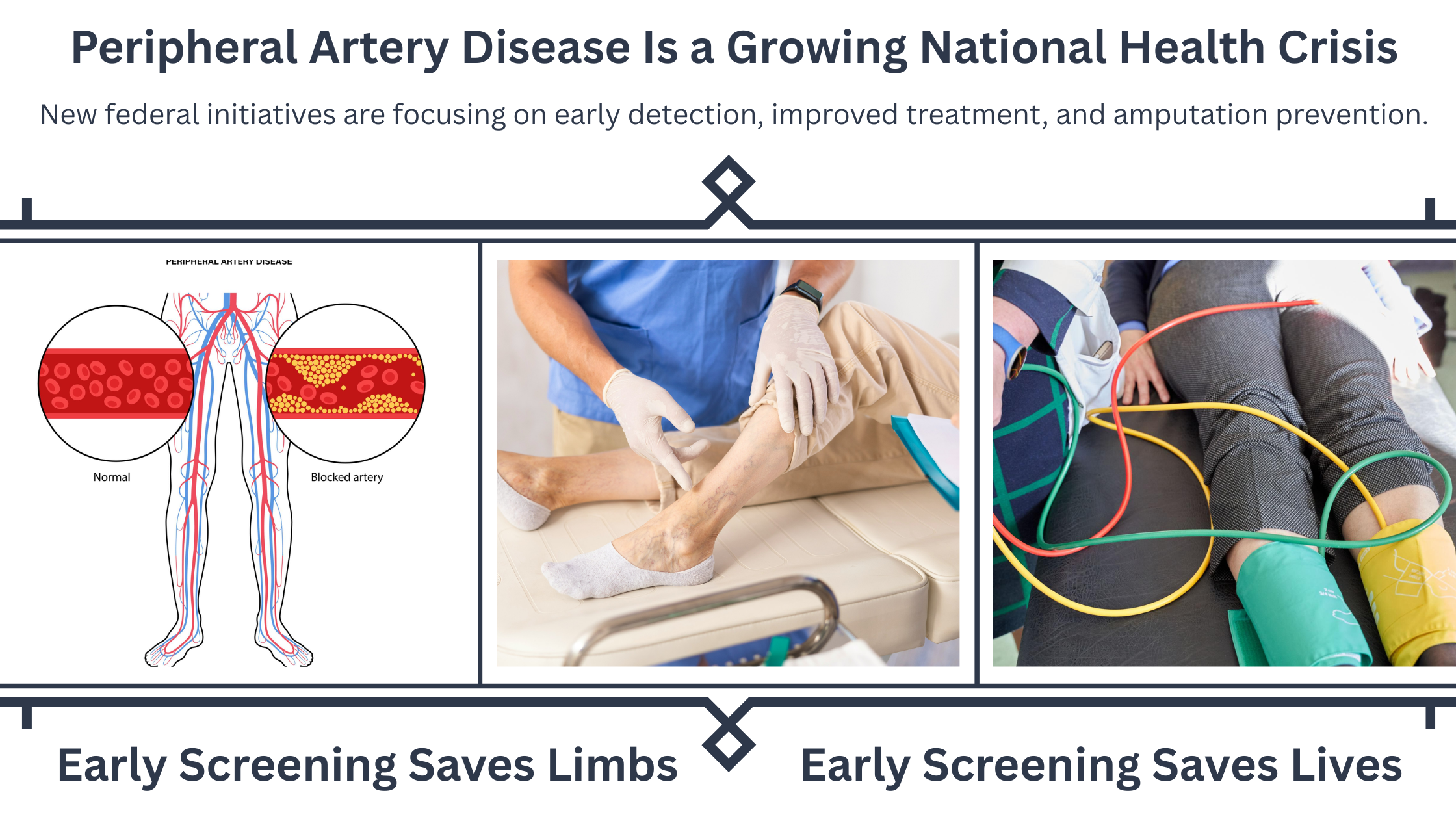
Peripheral Artery Disease (PAD) is rapidly becoming one of the most significant vascular health challenges in the United States. Recent federal legislation has recognized the seriousness of this condition and is directing national healthcare agencies to take stronger action to improve awareness, screening, and treatment.
The Consolidated Appropriations Act of 2026 (HR 7148) includes new directives aimed specifically at addressing PAD and preventing its most severe complication: limb amputation. This legislation signals a growing recognition that PAD must be treated not just as an individual patient issue, but as a national public health priority.
For patients and healthcare providers alike, these changes highlight the importance of early detection, coordinated care, and preventive vascular treatment.
Understanding Peripheral Artery Disease
Peripheral Artery Disease occurs when arteries that supply blood to the legs become narrowed or blocked by plaque buildup. This restricts blood flow and can cause symptoms such as:
- Leg pain when walking (claudication)
- Numbness or weakness in the legs
- Coldness in the lower leg or foot
- Slow-healing wounds on the feet or toes
- Skin discoloration or hair loss on the legs
In its most advanced form, PAD progresses to Chronic Limb-Threatening Ischemia (CLTI), a severe condition where blood flow is so limited that tissues begin to die. Without timely treatment, CLTI can lead to major limb amputation.
Why PAD Is Becoming a National Health Concern
The prevalence of PAD has been steadily increasing for decades. According to federal estimates referenced in the legislation:
- 1995: Approximately 11.3 million Americans had PAD
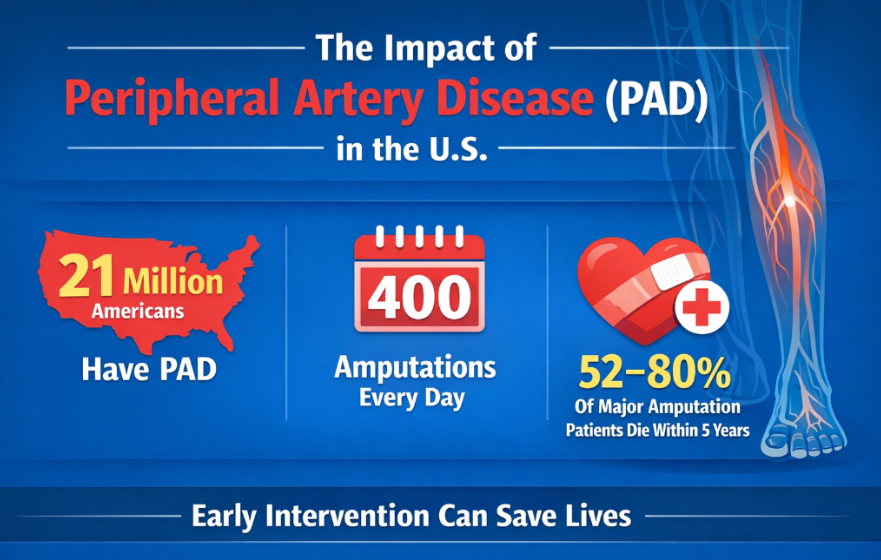
- 2020: The number rose to 21 million patients
- 2030 (projected): PAD cases may reach 23.8 million
Several factors are driving this growth, including:
- An aging population
- Increasing rates of diabetes
- Smoking history
- Hypertension and cardiovascular disease
- Sedentary lifestyles
Without aggressive screening and prevention strategies, PAD will continue to place an increasing burden on patients and the healthcare system.
The Devastating Impact of Amputation
One of the most alarming realities associated with PAD is the high rate of amputations when the disease is not diagnosed early.
Each year in the United States:
- Hundreds of amputations occur every day due to advanced PAD.
- 52%–80% of patients who undergo major amputation die within five years.
These statistics demonstrate that amputation is not simply a surgical procedure—it is often associated with significant long-term health risks, loss of independence, and reduced survival rates.
The financial burden is also substantial. Data cited by cardiovascular organizations estimate:
- $11.3 billion spent on major amputations
- $18.6 billion spent on minor amputations
- $233–$414 billion total cost associated with PAD care across the U.S. healthcare system
Preventing amputations through early intervention is both a medical and economic imperative.
New Federal Initiatives to Address PAD
The new legislation directs several federal health agencies to expand efforts related to PAD prevention and treatment.
1. Promoting Amputation Prevention Programs
The Centers for Medicare and Medicaid Services (CMS) is now directed to promote amputation prevention strategies across multiple healthcare settings, including:
- Hospitals
- Ambulatory Surgery Centers (ASCs)
- Office-Based Labs (OBLs)
These programs are expected to focus on:
- Identifying patients at risk
- Early screening and diagnostic testing
- Coordinated vascular care
- Risk factor modification such as smoking cessation and diabetes management
2. Expanding National PAD Education
The Centers for Disease Control and Prevention (CDC) are encouraged to collaborate with:
- CMS
- The Health Resources and Services Administration (HRSA)
- Clinical and patient advocacy organizations
Together, these groups will develop a national education program to increase awareness of PAD and encourage earlier detection.
3. Addressing Health Disparities
PAD disproportionately affects certain populations. Research shows:
- Black patients are three times more likely to undergo amputation due to PAD than non-Black Medicare patients.
- Hispanic and Native American communities also experience significantly higher amputation rates.
Improving access to early vascular care and education is a critical step toward reducing these disparities.
Why Early Detection Matters
PAD is often underdiagnosed because symptoms can develop gradually or be mistaken for other conditions. However, simple screening tools can identify the disease early.
One of the most common diagnostic tests is the Ankle-Brachial Index (ABI), which compares blood pressure in the ankle and arm to detect circulation problems.
When PAD is identified early, many patients can be treated with:
- Lifestyle changes
- Medication
- Minimally invasive vascular procedures
These interventions can restore blood flow, relieve symptoms, and significantly reduce the risk of amputation.
A Growing National Focus on Limb Preservation
Cardiovascular organizations such as the Society for Cardiovascular Angiography and Interventions continue to work with federal agencies to expand PAD education and prevention programs.
Their efforts emphasize a clear message: most PAD-related amputations are preventable when the disease is diagnosed and treated early.
The growing national attention on PAD reflects an important shift toward limb preservation, improved patient outcomes, and better long-term vascular health.
Taking the Next Step
If you or someone you love is experiencing symptoms such as leg pain when walking, non-healing foot wounds, or numbness in the legs, it may be time to speak with a vascular specialist.
Early screening and treatment can make a life-changing difference.
Peripheral Artery Disease is treatable—and in many cases, amputations can be prevented with timely care.
Sources
- Society for Cardiovascular Angiography and Interventions – Federal PAD initiatives and policy commentary related to the Consolidated Appropriations Act of 2026
- Centers for Disease Control and Prevention – Peripheral Artery Disease prevalence and national health statistics
- Centers for Medicare & Medicaid Services – Federal healthcare policy and amputation prevention initiatives
- American Heart Association – PAD patient outcomes and cardiovascular risk data
- National Institutes of Health – Research on Chronic Limb-Threatening Ischemia and PAD treatment outcomes